This story comes from a much earlier fork in the road, back when my life still involved other people deciding what tasks I had to do and what “professional” was supposed to look like. I’ve continued digging through old writing lately and found this one, which feels like an accidental origin story. It’s not about Airigami directly, but it explains a lot about why I eventually stopped trying to fit into someone else’s idea of employment.
I had been working as a software developer in a university research lab. I was getting really tired of what I was doing for a variety of reasons and thought it time to look for something else. I didn’t know quite what I wanted to do, but conveniently I received a phone call from someone looking to hire a programmer for a big company that found my name somewhere. I figured it was worth interviewing even though it wasn’t a company I was particularly interested in working for. My previous jobs had pretty much fallen into my lap and I had no experience interviewing in a corporate setting. This was going to be good practice, if nothing else.
As it happens, I had a friend that was working in HR for this company. I asked for tips on interviewing there. Her response was to stay home. “If you won’t listen to me and you interview anyway, don’t tell them you know me.”
“Huh?”
She took a breath and responded, “There’s nothing I can say to you that would get you to go to that interview looking like one of our employees. Since I’m in HR, I’m expected to prep anyone I know that’s interviewing with us. If you show up as yourself, and they find out I know you, I’ll get in trouble for not preparing you properly. So no, I won’t help you. Just know, we have a dress code.” My only real work experience was in university research labs. When I needed to dress up, I wore T-shirts without words on them.
On interview day, I walked in with a nice shirt on, my best jeans, and even a tie. I clearly didn’t look like anyone else in the building. When I approached the receptionist and told her who I was there to meet, you could clearly see that she was surprised. She directed me to sit down “over there”, far enough away that she could make a call that I couldn’t hear. I could only guess that she was letting the interviewer know what she was about to find. The way she looked at me, and the way she made the phone call, I felt as though my interview had already started. I have no idea if that was the case, but that’s certainly the way I perceived it.
The interviewer actually made me feel much more comfortable than everyone else around. We sat in her office and talked for a long time. I got a tour of the building, shook some hands, answered lots of questions demonstrating my coding skills, and then back to her office for the serious talk.
“You seem to have the skills we’re looking for. The next step from here is for you to come back to meet more of the team and see what they think. But before we do that, there’s just one thing I think we need to discuss. We … well … we … have a dress code.” Long pause. “In your position, you’d be required to wear….” I don’t remember details, but it was quite specific. Apparently their dress code was hierarchical at the time. (It has since changed.) “Women in your position would wear, well, that’s not important. It’s comparable.”
Without hesitation, I said, “Oh, please continue. I’d love to know what my options are.” I do not know if gender specific dress codes were illegal at the time, but I suspected they were, and I wasn’t going to let someone tell me what to wear at a job where I was going to sit behind a desk all day, never seeing anyone. So, I was being quite serious.
She went silent. She looked uncomfortable as seconds ticked by, trying to figure out how she was going to respond. I just smiled. Then she burst out laughing. “Oh, you’re kidding.” I wasn’t, but I decided to let it go for the moment. She added, “there is one more thing. The dress code includes hair length. Men’s hair cannot go below the middle of the neck.”
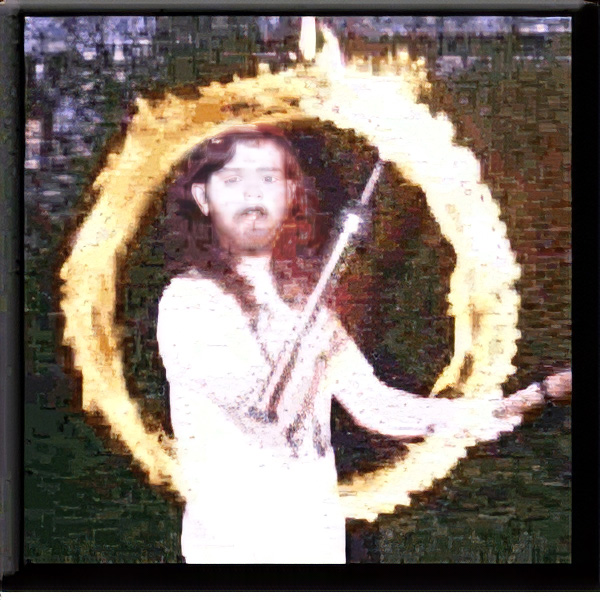
That was the thing that was said that told me I wasn’t going to take any job they offered. The job hadn’t been offered yet, but my decision was made. At the time, my hair went down to my waist. I was also a fire juggler and fire eater on weekends. The hair was actually part of my costume. As I would say in my show, “I was a brush fire waiting to happen.” (Everything was done safely. It was just a show.)
She continued, “if you were offered a job here, would you cut your hair?”
“Honestly, I don’t know. I’ll have to make that decision when the time comes.”
“I really need an answer to that.”
“I’m just not sure. I don’t want to tell you what you want to hear if it’s not true.” I was waiting to hear if I was going to be offered a job (or at least a second interview).
“Ok, look. I shouldn’t say this, but I really do want you to come back for another interview with the rest of the team. But I won’t offer that officially without your word that you’d cut your hair to work here.”
That told me what I needed to hear. I didn’t know for sure if I’d ultimately be offered a job, but I did well enough on an interview in what appeared to be the wrong environment for me. Now I was sure I could certainly interview anywhere that I did want to go. “Thanks for your time. I’m sorry. I’m just not ready to do that.”
About a year later, the same person called me. “Hey, Larry, I’ve changed jobs. I’m hiring programmers again. You’d fit in perfectly here. Can I get you to come in?”
I didn’t take that job either. By that point I had decided that what I needed was to be working for myself, building my art/entertainment business.