When I was a little kid, I wanted to be an astronaut. That incredible dream of shooting off into space was shattered when I watched a rocket launch on TV. I was too young to have a clear recollection of what launch it was. I’m guessing it was around the time of Skylab. I remember watching what I now know was a Saturn rocket on television lifting off with, I believed, a single astronaut on board. After all, a rocket is tall and stands upright like a person. With no scale reference, I just assumed the person going into space stood upright inside this tube-like thing designed to exactly fit a human. Boy, was I surprised when the TV showed the first stage separate from the rocket. I was terrified. Already certain that someone was standing in the rocket, it was clear that in order to get into space, the astronaut’s legs would be jettisoned from the ship. No way was I going to let NASA do that to me. Someone else could be an astronaut. I was going to find a new career path.
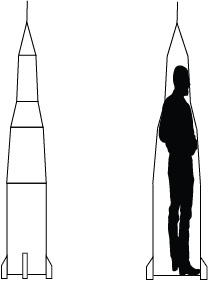
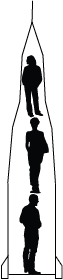
I clearly know a lot more about rockets now. I know they’re much taller than a person and that to fill them the astronauts must be standing on top of each other.
For someone who decided at a young age that space travel was far too dangerous for his legs, space somehow kept sneaking back into my life anyway.
There have been numerous Airigami projects over the years that have drifted into orbit around space themes. Here are just a few that I remember clearly.
One Giant Leap
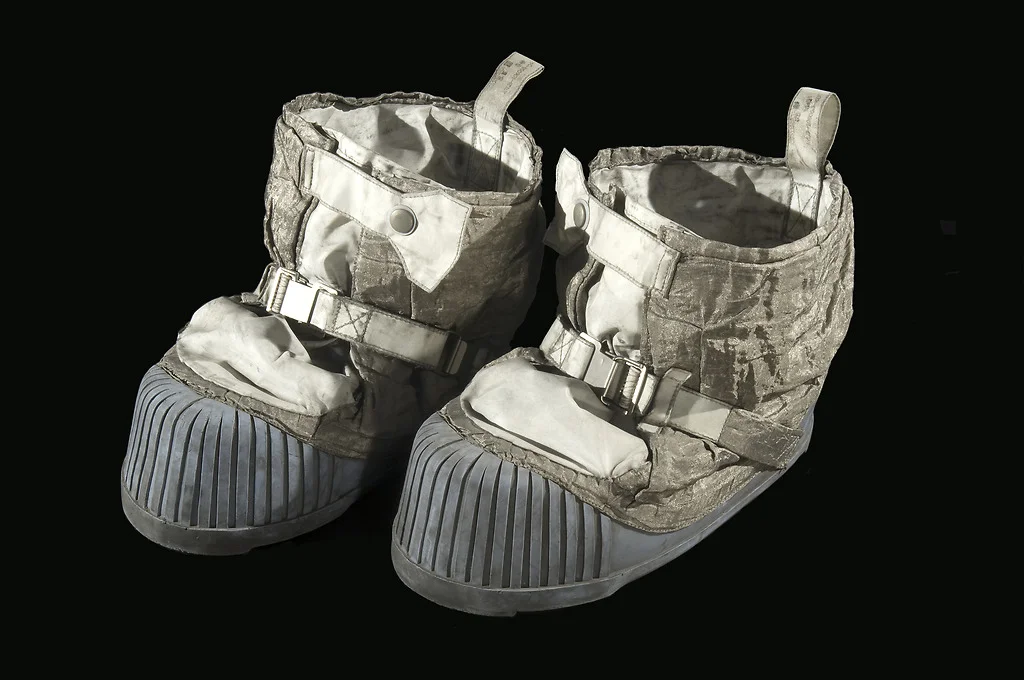
In 2019, we were invited to take part in the Smithsonian National Air and Space Museum’s late-night celebration marking the 50th anniversary of the Apollo 11 moon landing. At 10:56 PM Eastern time, the exact moment Neil Armstrong first stepped onto the moon fifty years earlier, a 12-foot-long Airigami recreation of Armstrong’s lunar overshoe would descend into the museum atrium.
The project began the way many of our projects do: with Kelly sitting surrounded by reference photos, trying to figure out how to turn something unique into blueprints. Armed with only photographs supplied by the Smithsonian, she created an initial model of the boot out of craft foam before translating everything into plans for the balloon version.
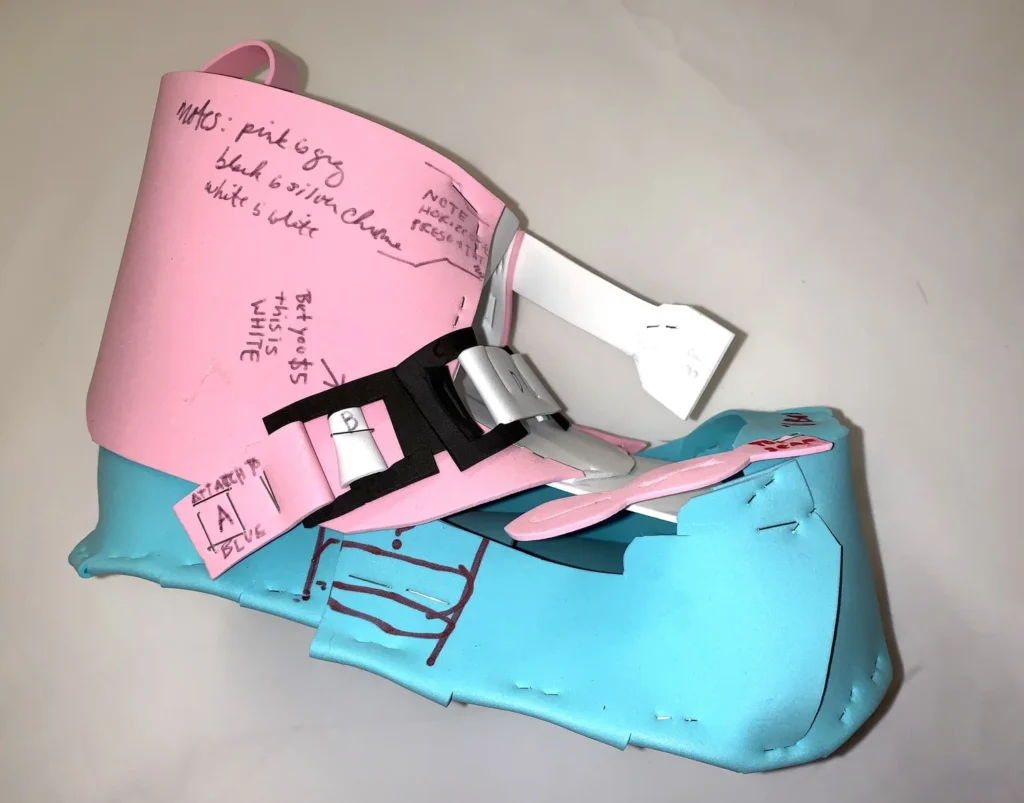
The installation itself took thousands of balloons and an incredible amount of planning. But what I remember most clearly may not actually be the museum.
After one of our planning meetings at the National Air and Space Museum, I was walking back to my hotel carrying Kelly’s foam model of the boot in a box. Along the way, I decided to stop at the National Gallery.
They let me in without any trouble. They became much more interested in me on the way out.
Apparently a guy carrying a mysterious box through a major art museum raises certain questions. Security guards stopped me and were absolutely convinced I had stolen something.
I tried explaining that it was a model of Neil Armstrong’s boot. This did not help. They wanted to know where I got it, and why I was walking through an art museum carrying a piece of art.
Eventually I had to pull out contracts from the Smithsonian along with photos and videos of Airigami projects to prove that I had, in fact, entered the museum carrying suspicious art-shaped objects and was now leaving with the same suspicious art-shaped objects– not something I had just picked up.
At exactly 10:56 PM, the same time Armstrong stepped onto the lunar surface in 1969, our oversized balloon boot touched down on the first floor of the museum while crowds gathered below.
People still wanted to celebrate that moment fifty years later. Kids who had just learned about Apollo stood next to people who remembered watching it happen live. Everyone was looking upward together.
Building a Space Shuttle
Five years earlier, we had already learned something important about space-themed balloon sculptures:
People really, really like giant spacecraft.
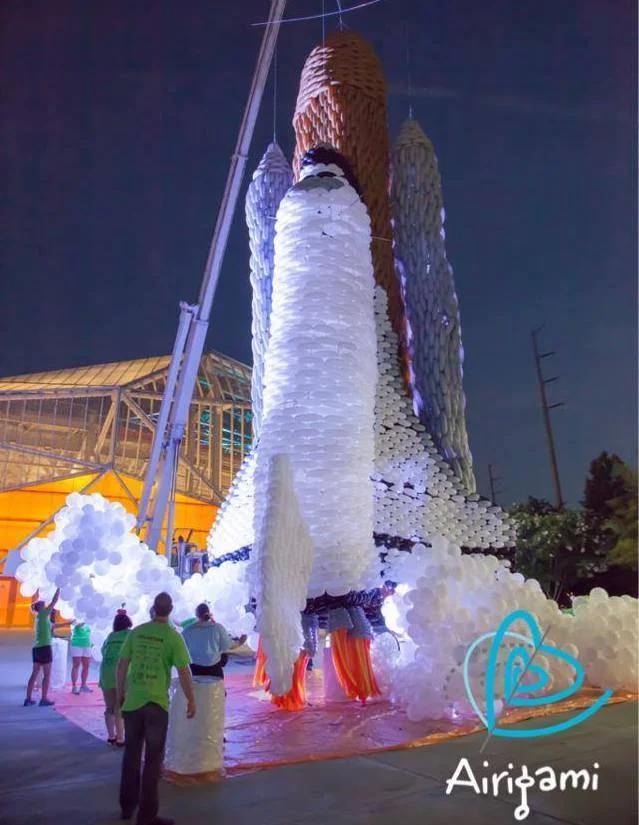
In 2014, we were invited to Houston to build a one-third scale Space Shuttle orbiter for the Transplant Games of America. By the time it was complete, the sculpture stood roughly 65 feet tall and used 30,000 balloons.
As with most large Airigami projects, the final sculpture was only part of the story.
The real project was the community that formed around it.
Every four-hour shift brought a completely different mix of volunteers. Kids from summer programs. Artists. Engineers. People connected to NASA. Families involved with the Transplant Games. Curious passersby. Balloon artists. Complete beginners.
Everyone had their own stories. And most importantly, everybody smiled while they worked.
Houston, We Had a Problem
Every new installation presents new engineering problems.
Most of our community builds have an organic feel to them. A coral reef can bend a little. A jungle can be asymmetrical. A Space Shuttle, however, needs to look like an actual Space Shuttle.
That meant precision.
We spent weeks testing structural ideas in the studio, building small sections to make sure our calculations worked. We had 58 pages of blueprints and 30,000 balloons on order. We really wanted this thing to fit together.
We also needed better equipment.
Commercial balloon inflators existed, of course, but we needed far more precision inflators than we had access to. So, in the spirit of the space program itself, we disappeared into the workshop and started inventing things.
The result was the Inflatinator.
Yes, we named it as if it were a device seen in an episode of Phineas and Ferb.
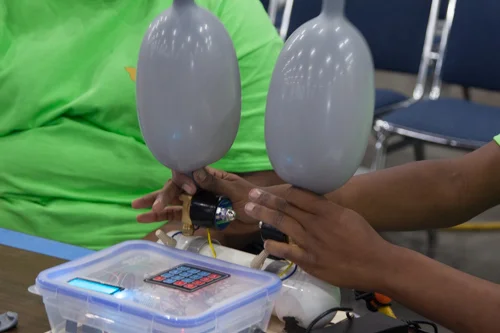
The Inflatinator is a custom foot-triggered balloon sizing system built partly from wonderfully glamorous aerospace-grade materials like food storage containers. The goal was simplicity. We wanted volunteers with zero balloon experience to be able to sit down and immediately start producing perfectly sized components.
Hundreds of volunteers used the prototype systems continuously through the entire build without destroying them. Even better, we woke up one morning to discover that Dr. Doofenshmirtz himself had declared us winners of his weekly “Inator Friday” challenge on Twitter.
I’m not entirely sure how many aerospace projects can claim validation from both NASA engineers and cartoon supervillains.
On Schedule for Liftoff
The final assembly was it’s own challenge.
The sculpture had been built in more than fifty separate sections. Our crew and volunteers had to move all of those pieces four blocks through Houston in July heat under police escort without destroying them before they could be attached to a waiting crane outside the stadium.
Seventy-five volunteers walked sections of spacecraft through the streets while additional crews hooked pieces to the crane one by one. As each new segment was added, the shuttle slowly rose above the city.
At the end of four days of work, we had created a reasonably accurate one-third scale Space Shuttle complete with solid rocket boosters and an external fuel tank.
It also survived outdoors in 97-degree heat. For a latex sculpture, this was a feat probably even more challenging than space travel.
To Infinity and Beyond
Space themes kept showing up. And what can be more iconic in stories of space than Space Ranger Buzz Lightyear.
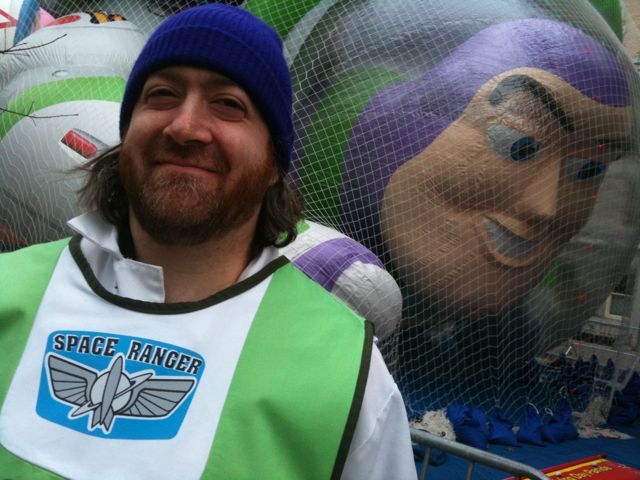
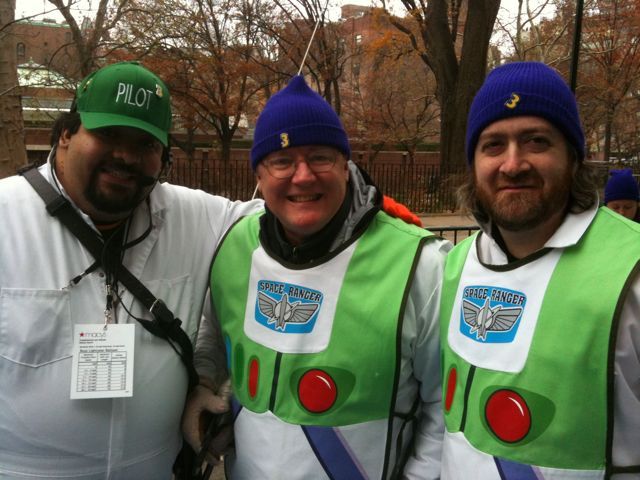
In 2010, I had the opportunity to help walk the giant Buzz Lightyear balloon in the Macy’s Thanksgiving Day Parade through Manhattan. Seventy-nine balloon handlers were needed just to move Buzz from 81st Street to 34th Street.
What I didn’t realize at first was that one of the people walking alongside me holding a rope was John Lasseter, the creator of Buzz Lightyear. He asked me questions about ballooning and giant inflatables as we walked the route together.
There were also Mars-themed STEAM projects with kids building imaginary habitats and geodesic domes. And Maker Faire events that mysteriously seemed to land on May the Fourth and somehow turned into Star Wars celebrations.
Thankfully, space wasn’t the final frontier for Airigami. There are always more challenges to conquer. As Buzz would say, “To infinity and beyond!”